Introduction
While shelters for families experiencing homelessness provide an essential response to immediate housing crises, they also represent an opportunity to support family stability and child development as families transition to permanent housing. The quality of the shelter environment can have a strong influence on the well-being and long-term outcomes of families experiencing homelessness. This includes considerations like physical design, programming, staffing, and connections to community resources.
Families who lack a fixed, regular, and adequate nighttime residence are experiencing family homelessness. Unlike other forms of homelessness, family homelessness is often less visible because families with children are more likely to stay in emergency shelters, temporary accommodations, or crowded arrangements with extended family or friends rather than experiencing unsheltered homelessness.1 As a result, accurately measuring the extent of family homelessness remains challenging. The 2025 U.S. Department of Housing and Urban Development Annual Homelessness Assessment Report to Congress (AHAR) estimates that approximately 230,366 individuals in families with children experienced homelessness on a single night in January 2025.2 This figure likely underrepresents the true scale of family homelessness due to limitations in data collection and the difficulty of capturing families experiencing hidden forms of homelessness.
Families who enter shelter often face challenges that extend far beyond the loss of housing. Children may experience disruptions to education, friendships, routines, and healthy development, while parents navigate financial hardship, employment barriers, mental health concerns, and the stress of securing stable housing. High-quality shelters therefore serve not only as temporary accommodation but also as environments that promote safety, dignity, resilience, and recovery.
Despite a growing emphasis on shelter quality, more research needs to be done regarding the characteristics that define an effective family shelter or the practices that produce the strongest outcomes for children and families. Much of the existing literature focuses on individual interventions or specific programs, without focusing on comparative results.
This report seeks to examine the characteristics of high-quality family shelters through a mixed-methods approach that combines a review of existing literature, a national survey of family shelter providers, and semi-structured interviews with practitioners. Drawing together evidence from research and professional practice, the report identifies common principles associated with quality shelter provision and explores how shelters can better support children, caregivers, and families while maintaining a clear focus on achieving
permanent housing.
Rather than promoting a single model of family shelter, the findings demonstrate that effective shelters share a set of core principles. These include prioritizing safety and permanent housing, tailoring services to families’ varying levels of need, supporting children’s development through child-focused and two-generation programming, investing in skilled staff, designing and maintaining environments that promote dignity and autonomy, and strengthening partnerships with community organizations. Together, these principles provide a framework for improving shelter quality and informing future policy, practice, and research aimed at supporting families experiencing homelessness.
Key Themes of Quality Shelter
1. A Tiered Approach Targets Resources Where They’re Most Needed
Family shelters have long operated using a one-size-fits-all model of temporary housing, in which every family receives the same comprehensive package of services. This approach, while helpful to some families, can lead to high costs and little choice among service users.3 To mitigate this, research instead highlights the benefits of differentiated, or tiered, models of care.4,5 Rather than providing identical services to every family, providers increasingly recognize that families enter shelter with varying strengths, needs, and levels of vulnerability.6 One provider interviewed said their shelter addresses “a broad range of needs, and also customize our services to what you, in particular, need, what you and your family need.” Programming is becoming more intentional in distinguishing between universal supports that benefit all families in shelter and specialized interventions reserved for those requiring additional assistance.
The first level of a tiered approach is universal stabilization. Universal stabilizations can include the interconnected supports that any family needs to sustain their family unit long-term, such as affordable permanent housing, jobs paying a livable wage, childcare, health care, and transport.7 On average, the family shelters we surveyed provided six services in this category of support. The first tier of support is typically focused on families who are more easily able to transition back into permanent housing but may need financial support to do so. Rapid rehousing programs, access to housing vouchers or cash assistance are key supports provided at this stage. Basic childcare is also key at this stage. Multiple interviewees noted the importance of childcare to help parents stay in or get back to work. One provider said, “We help you find a job and help you work a job in lots of ways. But one of the key ways is we take care of your kids of any age during the work week.” Another respondent described childcare as a prerequisite for organizational growth, underscoring its central role in supporting family stability. In addition to these key supports, every family entering shelter also benefits from safety and routine during what is often a period of significant upheaval. Welcoming play spaces, family engagement activities, opportunities for social connection, and clear orientation to available services help establish a sense of normalcy while reducing stress for both children and caregivers. These foundational supports create the conditions necessary for families to process the difficulties that arise from the immediate impacts of homelessness.
Figure 1: Families Face Interconnected Housing and Economic Challenges
We asked providers:
What types of support do families residing in your shelter need most?
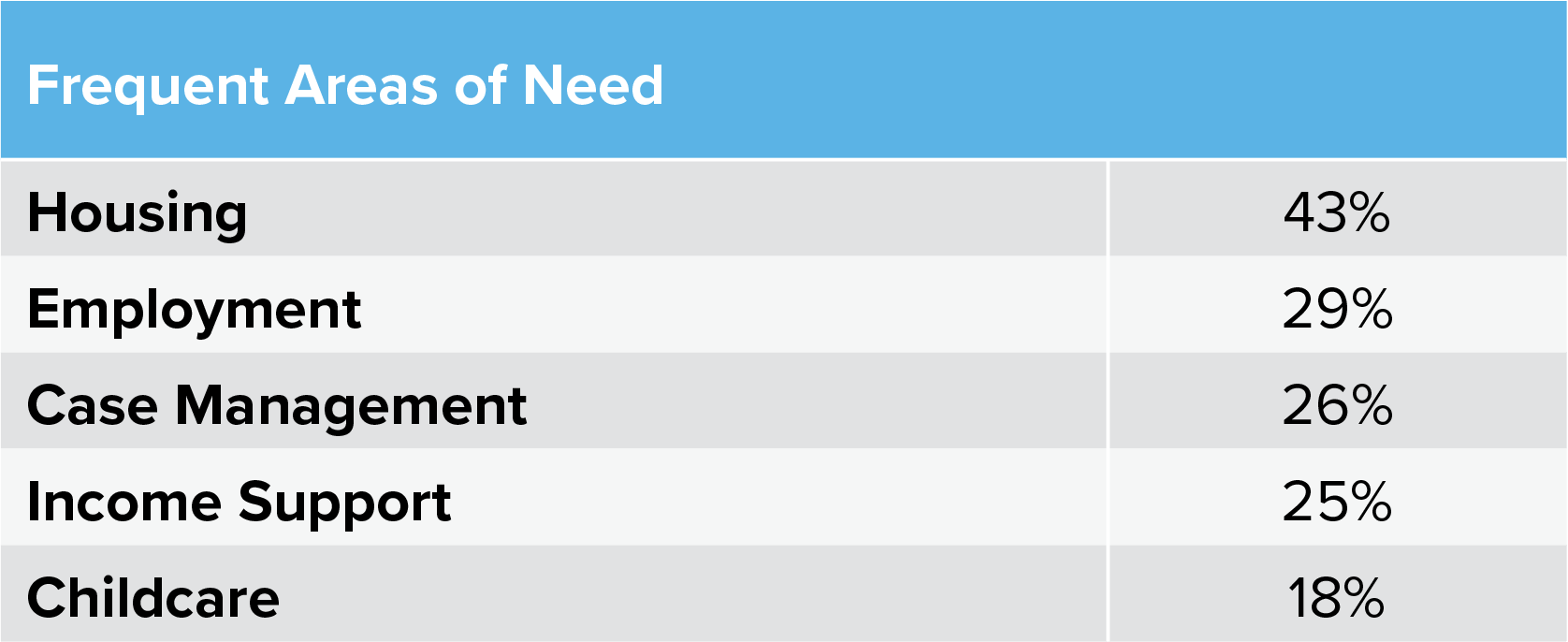 NOTES: This question was presented as an open-ended response and does not represent every area of need. Responses could reflect multiple types of areas of need so the total may add to over 100%. n=87.
For families facing additional challenges, shelters increasingly offer targeted supports that respond to specific developmental, educational, or family needs. On average, the family shelters we surveyed provided seven services in this category. These may include parenting education, academic assistance for school-age children, youth mentoring, group counseling, and enhanced case management. Rather than replacing universal services, these interventions build upon them, helping families address emerging concerns before they become more significant barriers to stability.
A smaller proportion of families require intensive, long-term interventions. On average, the family shelters we surveyed provided two services in this category, reflecting that this tier of support is the most specialized. These families often benefit from mental health services, individual counseling, crisis intervention, comprehensive family support, and structured aftercare following their transition into permanent housing. One provider noted that once their shelter began offering mental health services, the amount of time families needed to stay in the shelter decreased. Mental health services may be provided in supportive housing. Family Promise, a family shelter and supportive housing provider with affiliates across the United States, has permanent housing at 34% of their sites so they can continue to support those coming out of their shelters.8 Maintaining contact with families following their transition into housing enables providers to identify emerging concerns, reconnect families with community resources when needed, and provide ongoing guidance during a critical adjustment period. Together, mental health supports, employment services, and aftercare extend the impact of shelter programming beyond the shelter stay itself, contributing to stronger family resilience and more sustainable housing outcomes.
By matching services to the level of need, shelters can provide more efficient and responsive care while ensuring that every family receives meaningful support without overextending limited resources.
2. Safety Is the Foundation
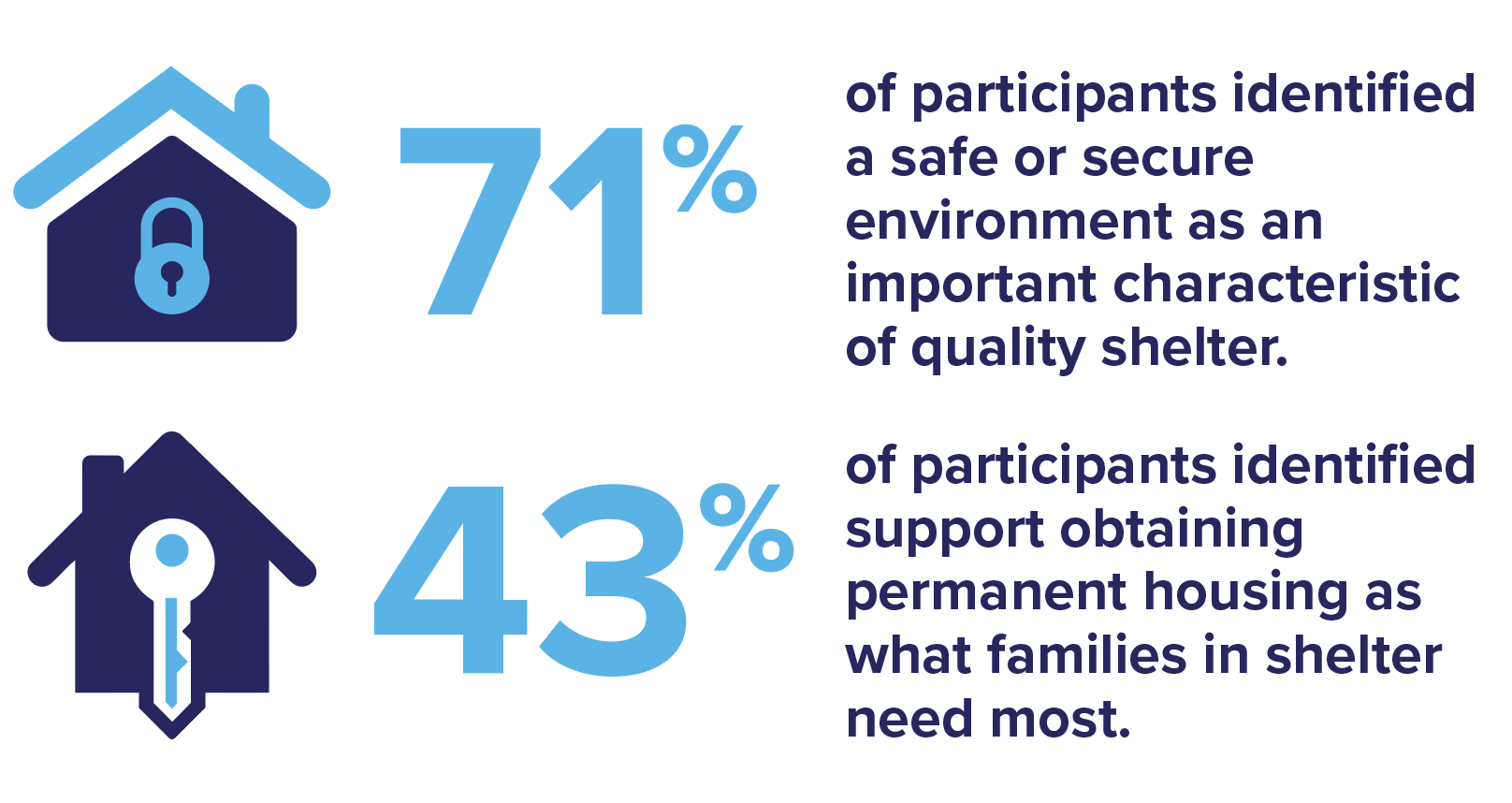
Safety is the foundation of a quality family shelter. While it featured in shelter guidelines and approaches to trauma in shelter, it was often treated as a secondary characteristic in academic research on shelter quality. However, it was the most frequently identified characteristic of quality shelter by interview participants and survey respondents. Forty-four percent of survey respondents and 71% of interview participants identified a safe or secure environment as an important characteristic of quality shelter. This difference may reflect the fact that safety is often treated as a basic assumption in research, whereas providers and families experience it as a central component of everyday shelter life. As one interviewed provider stated, “Every part of this building and the space has been designed with safety in mind, from the number of doors that we have to the type of glass that we have to how many entry points we have.” The same provider, whose shelter has a specific focus on domestic violence, sexual violence, child abuse, and human trafficking, emphasized that safety was an especially strong concern for residents, explaining that “if our building and our physical structure is a safe space for them, then we know that that’s a strong foundation for that working relationship.”
Safety extends beyond physical protection from harm. Families also need environments that promote emotional and psychological safety where they feel respected, supported, and able to establish routines without fear or uncertainty. Across the responses in interviews, providers highlighted the importance of clients not only being safe but also feeling safe. Building that feeling of safety required trust and constant communication between shelter staff and residents. A shelter provider interviewed described that policies about visitors and alcohol on campus were shaped by feedback from residents. The provider noted that safety is not one static concept but rather shelters must be “proactive and adaptive to keep a safe environment.”
Existing research does highlight an important balance between maintaining safety and preserving residents’ autonomy. Policies that rely heavily on surveillance or restrictive rules may inadvertently limit independence or create institutional environments.9 In light of this tension, advocates argue that safety can also be promoted through thoughtful shelter design and practice.10 Private family units, welcoming communal spaces, consistent routines, and sensitive and supportive staff interactions can all contribute to creating environments where families feel both secure and respected. Further research is needed to better understand how shelters can balance safety, autonomy, and dignity while responding to the priorities of both providers and residents.
3. Permanent Housing Is the Goal
Transitioning families to permanent housing they can afford and sustain is the primary goal of any shelter stay. Existing literature suggests that effective interventions for homeless families include beginning to address the issue of housing stability immediately.11 This emphasis was reflected in our survey findings, where housing application assistance (88%) and housing search assistance (87%) were among the most common services provided in shelters.
Support obtaining permanent housing was most frequently identified by survey participants (43%) as what families in shelter need most. Effective shelters therefore combine intensive housing-focused case management with strong partnerships with housing agencies and community organizations to maximize opportunities for permanent housing.12 A provider interviewed noted that staff at their shelter are working to build relationships with local landlords to find mutual benefit—landlords get reliable tenants, and shelter residents have safe, decent permanent housing to move into when they exit shelter.
Beginning housing planning at the point of entry into shelter and maintaining a clear focus on permanent housing throughout a family’s stay helps ensure that emergency shelter serves as a bridge to long-term stability rather than a destination in and of itself.
4. Programming Can Support Child and Parent Autonomy
Child-Focused Programming Promotes Resilience
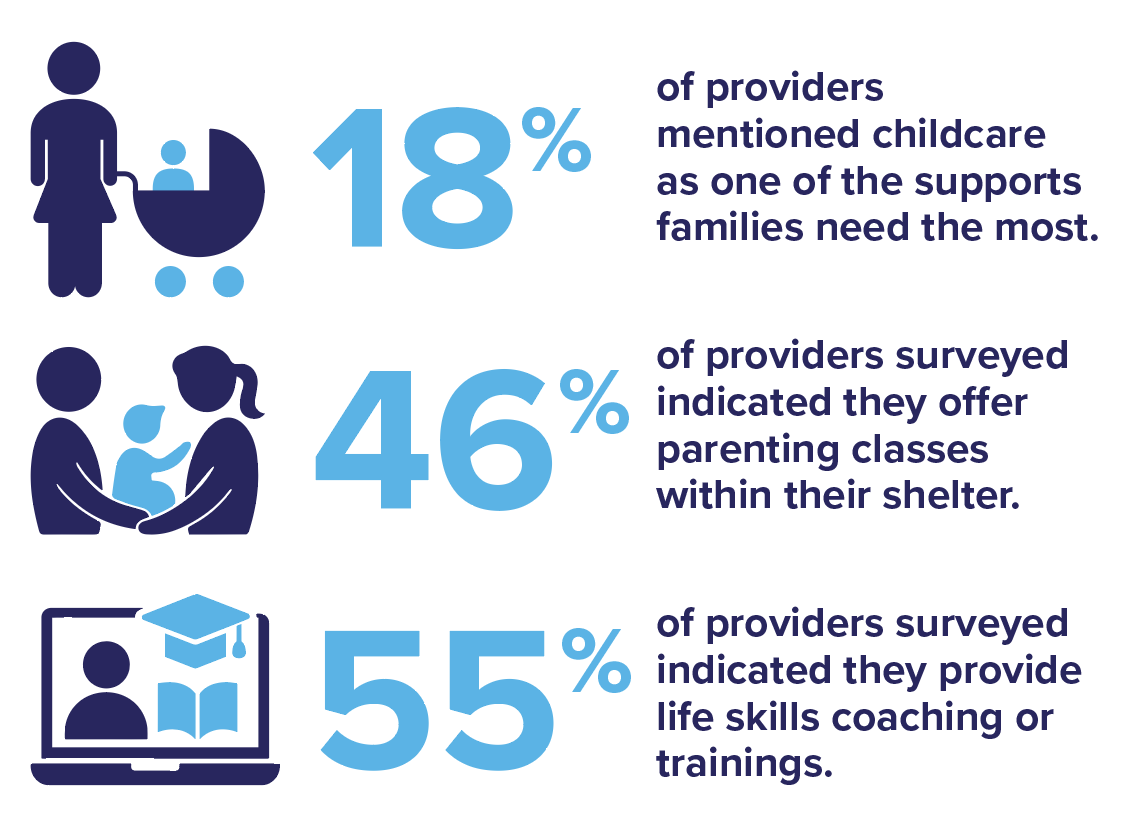
Nearly one quarter (24%) of shelter providers surveyed mentioned programming or services for children as a feature of quality shelter for families. Children experiencing homelessness face disruptions to many of the developmental contexts that support healthy growth, including school stability, peer relationships, recreation, and family routines. Research suggests that effective interventions must address these disruptions through a combination of housing stability, family supports, and child-focused services that promote educational, social, and emotional well-being.13 The National Center on Family Homelessness identifies housing, maternal well-being, child well-being, family functioning, and family preservation as key areas of need for children experiencing homelessness.14 Within this framework, child-focused shelter programming has emerged as an important practice because it emphasizes children’s voices, agency, and developmental needs. This is reflected in survey data: 34% of shelter providers reported they had childcare programming, and 18% mentioned childcare as one of the supports families in their shelters needed most.
 Rather than relying solely on adult-directed activities, successful programs create opportunities for children to make choices, explore their interests, and participate in shaping their own experiences. Choice, exploration, and decision-making can help children rebuild confidence and a sense of control following experiences of instability and trauma.15 Even small opportunities for autonomy can help.16 Consistency is equally important. Predictable and regular programming and familiar staff provide stability that supports children’s emotional regulation, learning, and social development.
Effective programs may include after-school programming, summer enrichment, recreation, tutoring, and play.17 Of the providers surveyed, more than half (51%) reported that their shelters provide academic support for children, 42% provided after-school programming, and 36% provided a youth summer camp.
A good practice example is Mary’s Place, a shelter for families experiencing homelessness in Seattle, Washington that provides shelter to 650 families each night. They operate a Kids Club which provides a model that combines age-appropriate activities, homework assistance, and recreational opportunities. The organization also coordinates with local school districts to ensure educational continuity and provide necessary transportation. These youth services extend beyond basic education to include enrichment activities like Science Club and Girl Scouts that help promote a sense of normalcy and stability for children.18
Additional to programming, research on shelter environments suggests that predictable, welcoming, and developmentally appropriate spaces can support children’s sense of safety and stability.19,20 One provider interviewed from Wisconsin described the importance of including spaces specifically meant for various ages and developmental needs, and a provider from Arkansas noted the importance of having books and toys in common spaces. Together, these findings position family shelters as environments where intentional programming and design can support children’s resilience and long-term development.
Two-Generation Programming Strengthens Family Outcomes
Child-focused programming for families experiencing homelessness is most effective when integrated within broader family-focused shelter systems. Consistent with this, 37% of survey respondents who mentioned child-focused programming also mentioned family-focused approaches. In fact, overall respondents were almost equally likely to mention themes related to two-generation programs (23%) as child-focused approaches (24%). Two-generation approaches recognize the interconnected nature of caregivers and child well-being.21,22 Children’s development cannot be considered independently of the circumstances facing their parents or caregivers, and interventions that support the family can be more effective than those targeting individuals in isolation. In the opinion of one shelter staffer, the most important aspect of quality shelter for families with children is to ensure that their parents are fully able to care for them, as this is how shelters can best ensure that children are safe and comfortable. Another provider expressed a similar sentiment, saying, “In order for our kids to be happy, healthy, and safe, they need to have people that can care for them that feel healthy and safe.”
Two-generation programming intentionally creates opportunities for caregivers and children to learn, play, and participate together. Parent–child activities, family learning opportunities, shared meals, parenting workshops integrated with children’s programming, and recreational events all strengthen relationships while reinforcing positive interactions during periods of stress.23 Nearly half (46%) of providers surveyed indicated they offer parenting classes within their shelter and 55% of providers indicated they provide life skills coaching or trainings. These shared experiences not only improve children’s sense of security but also enhance caregivers’ confidence and capacity to support their children’s development.
This type of programming takes many forms in family shelters. According to one interviewee, a key resource for children in their shelter is “parent advocates.” These advocates help parents engage with their child’s school and develop the tools to address any behavioral issues that arise with their children.
Some best practices can be found in partnering with community-based services with expertise in serving families experiencing homelessness. For instance, The Empowerment Zone project in Baltimore City Public Schools provided a summer program with mental health services for homeless and low-income children, while also offering parents training in behavior management. Parents from both the homeless and low-income groups reported reductions in their children’s overall behavioral problems, with the homeless group reporting greater improvements. In addition, teachers observed enhanced social skills among children in both groups following the intervention.24
Horizons for Homeless Children in Boston runs Community Children’s Centers (CCCs),25 which also place a strong emphasis on parental engagement in children’s education. Parents spend a minimum of one hour each month in their child’s classroom, where they observe and participate in learning activities. This involvement is reinforced through parenting and life skills workshops that highlight the importance of effective parent–child communication and regular peer group meetings that provide opportunities to share parenting experiences and advice. Children enrolled in these early care and education programs showed greater improvement in academic scores, vocabulary, and receptive language skills than the control group.26
Reducing Transportation Barriers Ensures the Most Families Participate
Transportation is a significant but often overlooked barrier that limits families’ ability to access the resources needed to achieve long-term stability.27 Even when shelters provide or coordinate services such as employment assistance, childcare, healthcare, and early childhood education, these supports have limited impact if families cannot reliably reach them. The Center for Transforming Lives in Fort Worth, Texas provides shelter and comprehensive support services for mothers and children experiencing homelessness. They identified transportation as one of the greatest challenges facing those that they serve, noting that it creates ongoing difficulties in managing daily responsibilities and accessing essential services.28 One interviewee from a different organization spoke about the issue of “time-economics,” which become very difficult for families in communities without strong public transportation systems, especially single-parent families like many at this particular shelter. For many families, trying to get everything done in a day can be nearly impossible, “and so the time economics then bleeds into the money economics.”
Providing services such as employment assistance, childcare, healthcare, and early childhood education within the shelter can help reduce transportation barriers that can otherwise prevent families from accessing critical support. More than two-thirds of shelter providers surveyed indicated that most or all the services available to residents were on-site, highlighting that on-site services are important to quality shelter. Where cost or capacity becomes an issue, shelters can partner with other agencies and organizations to address families’ needs. One interviewee, whose shelter partners with a healthcare provider to provide services on-site says, “The … willingness of other systems to co-locate can be another key to unlocking a lot of that [comprehensive support].”
Another option for reducing transportation barriers is providing transportation supports like vans or shuttle buses from shelter to necessary services—39% of shelters surveyed provide some sort of transportation support, and an additional 12% of survey respondents indicated that they wish transportation support was available to families at their shelter.
Reducing transportation barriers can increase participation in programs and improve families’ ability to access the supports necessary to secure stable housing and improve their long-term well-being.29 By minimizing the need for travel by offering on-site programming when possible, and transport assistance when on-site programming is not possible, shelters can increase participation in supportive services and improve families’ ability to secure stable housing and achieve long-term well-being.
5. Supported Staff Are Supportive to Residents
Staffing and staff conduct was mentioned as a key aspect of quality shelter by one in four survey respondents. Good practice in shelter staffing extends beyond meeting families’ immediate housing needs and requires staff to balance practical support, external advocacy, and relationship-building. Being aware of the difficulties residents arrive with was an important point raised by practitioners as well. Among survey respondents, 31% indicated that quality shelter means being aware of and responsive to residents past trauma.
Staff also play an important role in helping families access essential services. Parents experiencing homelessness often express that the systems they encounter when accessing services are difficult to navigate, but this difficulty can be mitigated by supportive staff.30 However, effective practice can be hindered by role ambiguity, limited resources, low pay, administrative barriers, and unrealistic expectations, all of which contribute to frustration and burnout among staff.
To address these challenges, comprehensive training that equips staff with knowledge of child development, mental health, and strategies for supporting positive parent–child relationships is key. Lived experience can also foster trust between residents and staff—at Lotus House in Miami, nearly 40% of staff have lived experience of homelessness.31 An interview participant with lived experience felt so supported by shelter staff while in a domestic violence shelter that they went on to work for a shelter provider. They said, “The employees that are there at the shelter are [families’] number one resource … The advocate is critical to every family’s success. Ultimately, you can’t succeed for them; they have to do that themselves. But a quality advocate makes it so much easier for them to make the transition out of homelessness.”
Low child-to-staff ratios in play settings, as well as assigning specific staff members as advocates for each family, can help build consistency and trust between families and staff and manage caseload.32 Strengths-based approaches where staff give positive feedback can help to support and empower families.33 One Washington shelter provider interviewed said that residents, “catch this vision from us that we actually believe that they can do this and that we think they’re the hero. … For some of them, that’s a new experience to be believed in.”
6. The Physical Environment Is Part of the Intervention
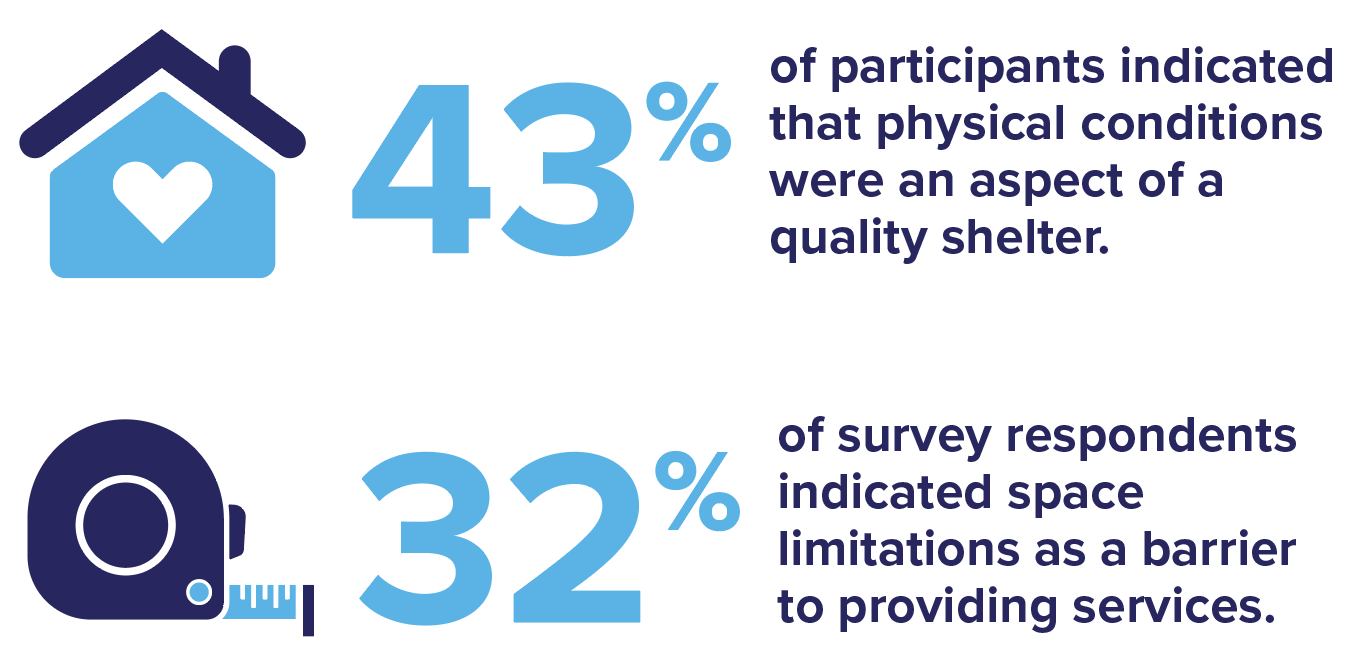
The physical environment of a shelter is increasingly recognized as an essential component of effective programming rather than simply the setting in which services are delivered. Aspects of a shelter’s physical conditions were mentioned by 43% of survey participants as an aspect of quality shelter. This included mentions of a welcoming or non-institutional environment, cleanliness, building maintenance, privacy, and adequate space for living or programming. The design of spaces influences how families interact with one another, whether they participate in programming, and how safe, respected, and comfortable they feel during their stay.34
Figure 2
We asked providers:
What do you think makes a “quality” shelter for families with children?
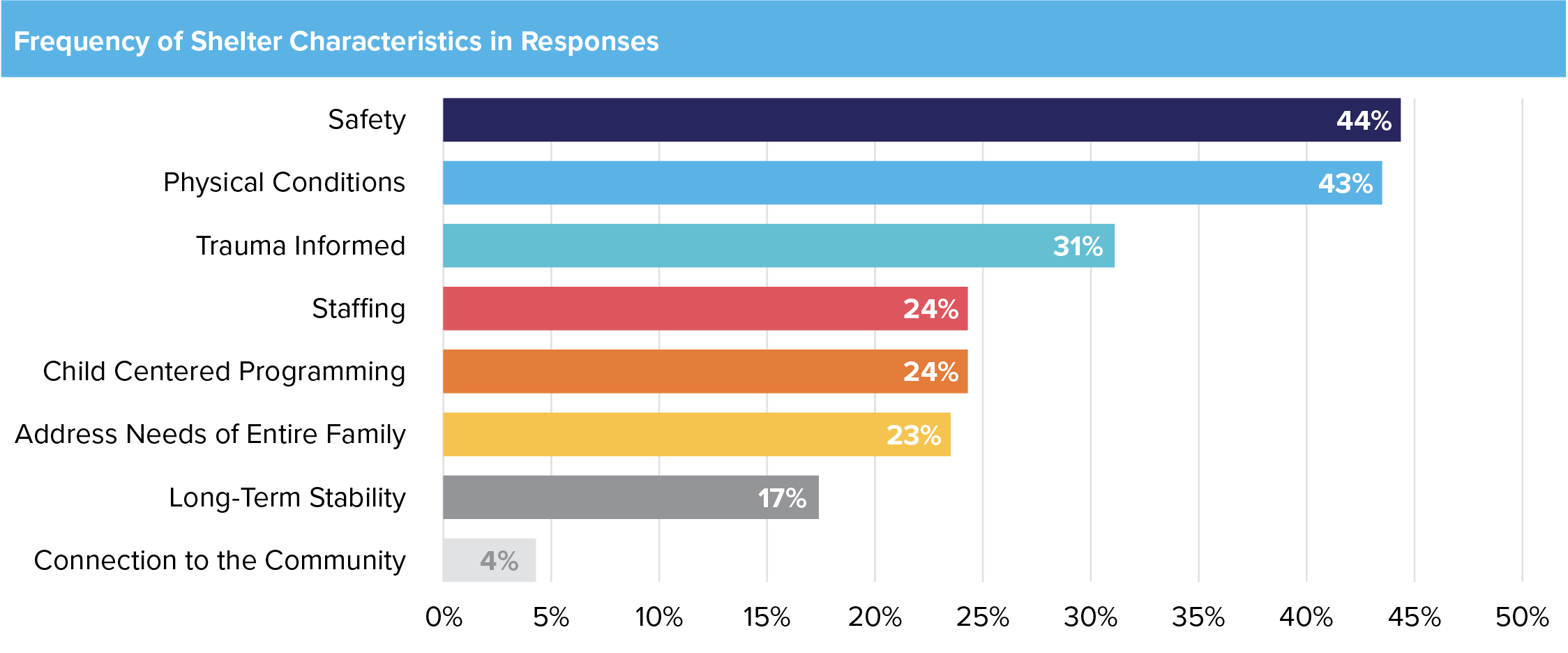
NOTES: This question was presented as an open-ended response and does not represent every response. Responses could reflect multiple topics so the total may add to over 100%. n=111.
Spaces should support activities happening in the shelter. Resources like computer rooms can allow for job searching and after-school programming, whereas play and learning areas can support children’s development. Spaces can allow families to exercise choice and autonomy and adapt to different age groups and uses throughout the day. This latter point is especially important as, nearly one third (32%) of survey respondents indicated space limitations as a barrier to providing services they wish they had in their shelters. As one interviewee said, “We’re always looking at our space and our design because really, if we can adapt our space, our environment, and our approach to make it easier for folks, as opposed to asking them to fit into this little box that we have, we know that they’re going to have a more successful entry and exit.”
In addition to welcoming common spaces, there are benefits to providing private, non-institutional living spaces that promote dignity, privacy, and autonomy. Sound is also a consideration, with one interview participant additionally noting the importance of sound absorption for family shelters that house many children. A good practice is to offer separate units with their own bathrooms and kitchenettes where it is possible to provide the most privacy and convenience.35 More than half of shelter providers surveyed have individual living units for families, and nearly half provide private individual bathrooms. However, only about one-third of shelters were equipped with their own space and utilities to cook or prepare meals. This may be due to limitations of existing buildings—almost half of respondents (46%) reported operating from buildings that were not originally designed as shelters.
Both the literature and interviews identified the importance of environments that are welcoming and non-institutional. One provider said the shelter they work in is, “designed to appear more like a home than a facility.” Bright, flexible spaces that encourage exploration and play communicate a sense of dignity and belonging, while avoiding the sterile atmosphere often associated with emergency housing. Natural elements like plants and outdoor spaces may also support mental wellbeing and family cohesion in shelters, though more research is needed.36
Design principles that promote a calming and consistent environment can reduce stress and foster a sense of safety for families.37,38 The Path Home Family Village in Portland, Oregon was designed with these principles in mind, using natural light, curved walls, and soothing colors.39 These elements combine in large, spacious, multi-use rooms where residents can choose how they use the space.
Signage and wayfinding can also play an important role in fostering this sense of predictability, even in spaces not originally designed as shelters. One such example is a New York City shelter featuring signs placed at heights where children could easily read them and in colors and with pictures that conveyed that these were spaces to be enjoyed, promoting a greater sense of control and agency for children in the shelter.40
7. Strong Community Connections Benefit Residents
Rather than operating as isolated emergency facilities, some shelter providers are recognizing the benefits of turning shelters into integrated community resources. This shift recognizes that families benefit when shelters are embedded within the broader network of neighborhood services and organizations rather than existing apart from them. Research finds that opening selected programs and services to members of the surrounding community can help reduce stigma, encourage social inclusion, and create opportunities for meaningful interaction between shelter residents and their neighbors.41 Allie’s Place Family Residence in New York City is an example of this integrated approach. The Culinary Center at Allie’s Place functions as a workforce development hub open to both shelter residents and the broader community, providing job training that prepares adult students for careers in the food and hospitality industry.42 Another example is Lotus House in Miami. Alongside its shelter services, it has developed strong partnerships with community-based organizations to deliver health care, mental health services, education, employment support, and childcare. Its new Children’s Village aims to serve as a neighborhood resource center, housing more than a dozen nonprofit organizations and offering supportive services and educational opportunities to local children and families, whether or not they live at the shelter.43 While shelters like Allie’s Place and Lotus House are finding benefits in this model, only 4% of survey respondents indicated some type of community integration as characteristic of quality shelter. Further research could explore why this is the case, including potential funding and safety constraints.
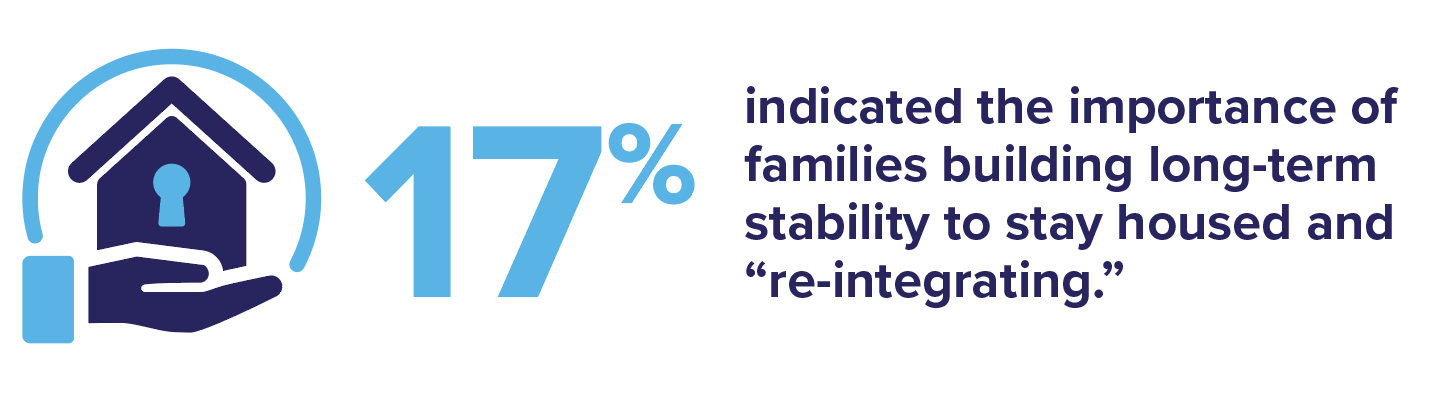
Another approach to strengthening community connections is supporting shelter residents in accessing programs and services beyond the shelter itself. Of the survey respondents, 17% indicated the importance of families building long-term stability to stay housed and “re-integrating.” One interviewed provider said their programming is, “designed to connect folks with the greater community, so that they feel like they have a sense of community and have connections to resources and ongoing support inside and outside of the shelter.” This includes a range of services targeted at connecting residents with the broader community, such as assistance enrolling adults and children in schools, enrolling young children in childcare, and even “snuggle breaks” with local animal welfare societies.
Research has found that building a connection between the community and schools is particularly important in helping children who are homeless.44 This connection can be fostered in different ways. Among survey respondents, 15% indicated they had full or part-time local school representatives in their shelter building.
The homeless services and housing provider HopePHL’s program, the Building Early Links for Learning (BELL) partnership with Philadelphia Office of Homeless Services, is an example of good practice in supporting family shelters in establishing an educational liaison role with local school districts.45 These liaisons are typically existing staff members who are responsible for helping families enroll their children in early education programs. BELL staff work alongside shelter-based liaisons to build capacity, provide guidance, and strengthen connections with local early childhood providers. A key focus of this work is fostering strong relationships between education liaisons and nearby programs, helping ensure that families can more easily access educational opportunities and maintain continuity of support within the broader community. Preliminary evidence suggests that BELL has helped to increase preschool enrollment for children staying in shelter.
Barriers Limit the Services Shelters Can Provide
Funding (55%), space (32%), and staffing (23%) were identified by survey respondents as barriers that kept them from providing desired services like childcare (26%), mental health support (21%) and employment support (15%). One of the providers we interviewed also noted the need for more training and resources to support children with developmental disabilities and
special needs.
These findings highlight that many of the limitations experienced by family shelters are structural rather than a lack of understanding of what constitutes good practice. Across both the survey and interviews, providers demonstrated a clear awareness of the services and environments that best support children and families. However, many reported that financial and operational constraints prevented them from fully implementing these approaches.
Figure 3: Providers Want Services That Support Long-Term Family Stability
We asked providers:
What services do you wish were available in your shelter?
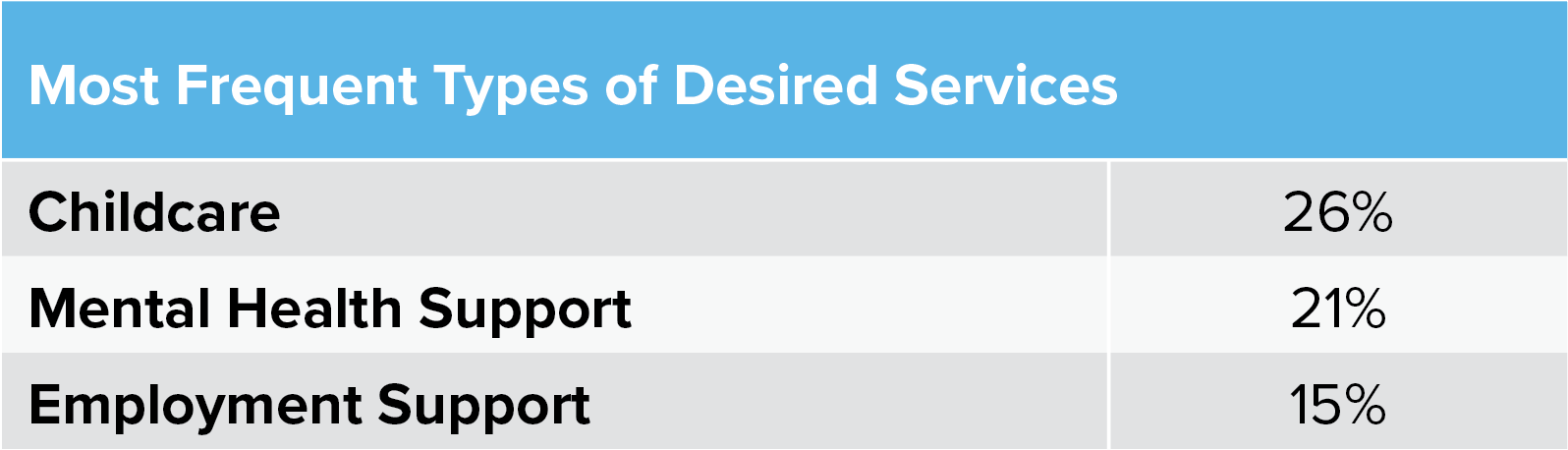
NOTES: This question was presented as an open-ended response and does not represent every desired service. Responses could reflect multiple types of services. n=81.
Responses counted as Mental Health Support if providers shared a desire to hire mental health professionals, provide dedicated mental health counseling, or provide unspecified mental health services.
Responses counted as Employment Support if providers shared a desire to provide dedicated job training, assistance in finding employment, supporting career readiness, or provide unspecified employment support.
Figure 4: Providers Face Structural Constraints in Offering Additional Desired Services
We asked providers:
What are some barriers or constraints to providing additional desired services?
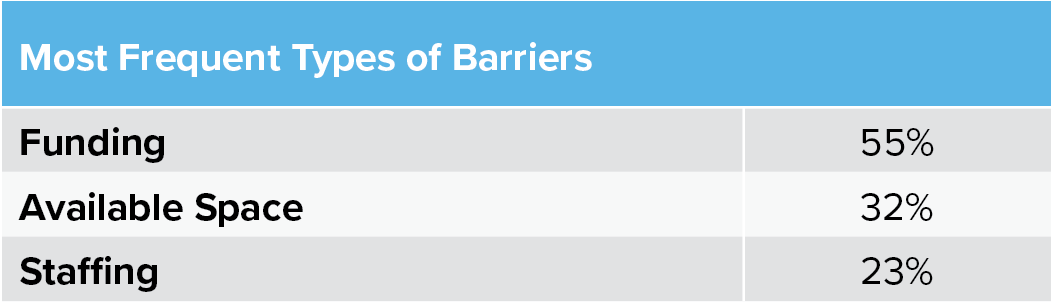
NOTES: This question was presented as an open-ended response and does not represent every barrier to desired services. Responses could reflect multiple types of areas of need so may add up to over 100%. n=65.
The analysis for this information comes from the responses of a combined open-ended question. Providers were asked; What service(s) do you wish were available in your shelter(s)? What are some of the barriers or constraints to providing these services? Therefore, these barriers may be tied to the specific services providers indicated and are not reflective of all additional desired services. See Figure 3 for the most frequent type of service desired by providers.
Recommendations

Match Services to Families’ Levels of Need
Not every family requires the same level of support. Flexible service models that combine universal stabilization supports with targeted interventions for families experiencing more complex challenges can help allocate resources effectively while ensuring that families receive the level of support they need.

Implement Child-Focused and Two-Generation Programming
Incorporating programming that supports children’s developmental well-being can mean offering them chances to have a voice during a destabilizing period of their lives. Parents can play an essential role in their child’s development through two-generation approaches. Predictable routines can be one of the most valuable aspects of shelter programming. This consistency promotes emotional regulation while reducing anxiety associated with frequent disruption.

Prioritize Permanent Housing from the Point of Entry
Every aspect of shelter programming should contribute to the goal of securing stable, permanent housing. Housing search assistance and benefits navigation is effective when it begins as soon as families enter shelter and continues throughout their stay.

Invest in the Workforce That Supports Families
Skilled, well-supported staff are key. Staff training can focus on things like child development, family engagement, and strengths-based approaches, while maintaining staffing levels that allow staff to build trusting relationships with families. Staff well-being and manageable caseloads should also be recognized as essential components of quality service delivery.

Design Shelters That Promote Safety, Dignity, and Family Well-Being
The physical environment is essential to delivering effective services. Prioritizing private family units, child-friendly spaces, and flexible communal areas can help give families both privacy and agency. Spaces should feel welcoming rather than institutional, and safety of residents should be top of mind.

Strengthen Partnerships Beyond the Shelter
Building partnerships with schools, childcare providers, health care services, employers, and community organizations can help better serve residents. These partnerships increase access to services during the shelter stay and strengthen community connections that continue after families leave shelter.

Continue Investing in Research and Evaluation
While this report identifies several emerging practices associated with high-quality family shelters, further research is needed to better understand which approaches produce the strongest long-term outcomes for children and families. Ongoing evaluation, collaboration across the sector, and sharing of promising practices will help strengthen the evidence base and support continuous improvement in shelter services.
Further Directions for Research
While the literature identifies many promising approaches, relatively few interventions have been evaluated using robust longitudinal or comparative methods. Stronger evidence would help identify which interventions produce the strongest long-term outcomes for children and families.
The survey findings raise important questions about differences in service provision across shelters. We would like to conduct further investigation with a wider range of providers from different geographic areas. Since funding was identified by providers as a key constraint to providing services, we would also like to gather information about the funding sources of those surveyed. Examining the relationship between funding sources and the availability of programming to shelter residents and the wider community can help identify strategies for improving service delivery across the sector.
“Anything gets better when we talk to each other and learn from each other. And there just isn’t a resource for others that do this work to connect and collaborate … it would exponentially improve the experience of families in shelter if we had the ability to learn from each other.”
Conclusion
While the primary purpose of shelter is to provide immediate safety and a pathway to permanent housing, the evidence presented in this report demonstrates that quality shelter is defined by much more than just a temporary place to stay. The strongest shelter models recognize that families experiencing homelessness are not only navigating a housing crisis but also disruptions to children’s development, family routines, relationships, and access to essential supports.
A quality family shelter is one that creates an environment where families can regain stability, dignity, and a sense of control. This requires recognizing families as active participants, ensuring that services are responsive to their individual strengths and needs.
The findings from this report highlight that there is no single model of a quality shelter. Instead, effective shelters share common principles: they cultivate safety, prioritize permanent housing, support children’s development, strengthen family relationships, and connect families to broader community resources. As communities continue to address family homelessness, investment in shelter quality should be viewed not only as an investment in emergency response, but as an opportunity to improve long-term outcomes for children and families.
Appendix
Methodology
This study employed a mixed methods design with three complementary components: (1) a structured literature review, (2) an online survey containing both closed and open-ended questions, and (3) semi-structured interviews with practitioners. The combination of these methods enabled the gathering of evidence from academic research and professional practice to develop an understanding of family homelessness, shelter quality, and the role of shelter design and programming.

Literature Review
A literature review was undertaken to identify, appraise, and synthesize existing evidence relating to family homelessness, shelter quality, shelter design, and outcomes for children and families experiencing homelessness.
The review focused primarily on literature from the U.S. and Canada published from 2000 onwards to reflect contemporary policy, service delivery, and shelter design approaches. Publications prior to 2000 were excluded unless they were incorporated within systematic reviews or other evidence syntheses published after 2000, allowing influential earlier research to be considered where it informed more recent evidence. Studies that focused exclusively on single adults, youth homelessness, unhoused homelessness without consideration of shelter provision, or unrelated housing interventions were excluded.
Survey
An online survey was developed to gather broader perspectives from individuals with knowledge or experience of homelessness services. The survey included both closed-ended questions, enabling descriptive statistical analysis, and open-ended questions, allowing respondents to elaborate on their experiences and recommendations.
The survey received more than 100 responses from 30 states, providing a dataset from which both quantitative and qualitative insights could be drawn. Closed-ended responses were analyzed using descriptive statistics, including frequencies and percentages, while open-ended responses were analyzed using thematic analysis.
Semi-Structured Interviews
Semi-structured interviews were selected to provide consistency across key topics while allowing participants the flexibility to discuss issues they considered most significant. Interview questions explored perceptions of effective family shelter environments, service provision, the needs of children and families, the strengths of current shelter models, and recommendations for the future.
Data Integration
Data from the literature review, interviews, and survey were integrated. Themes emerging from one method were compared with evidence from the other data sources to identify areas of convergence and divergence. This process strengthened the credibility of the findings by drawing upon multiple forms of evidence rather than relying on a single source.
Limitations
The study has several limitations. Restricting the primary search to publications from 2000 onwards may have excluded some earlier foundational research. The interview sample was intentionally small, reflecting the qualitative nature of the research, and therefore cannot be considered statistically representative. Similarly, although the survey achieved over 100 responses, participation was voluntary and may be subject to self-selection bias. The survey and interviews had limited representation from people with lived experience of family homelessness. Future research should continue to engage this population directly and incorporate their perspectives into evaluations of family shelter quality and practice.
References
1. Soucy, Daniel, Andrew Hall, and Joy Moses. “State of Homelessness: 2025 Edition.” National Alliance to End Homelessness, September 4, 2025. https://endhomelessness.org/state-of-homelessness/#report.
2. US Department of Housing and Urban Development. “The 2025 Annual Homelessness Assessment Report (AHAR) to Congress Part 1: Point-In-Time Estimates of Homelessness.” Huduser.gov, May 2026: 29,39. https://www.huduser.gov/portal/sites/default/files/pdf/2025-AHAR-Part-1.pdf.
3. National Alliance to End Homelessness. “Transitional Housing: What Is It?” July 23, 2026: 1. https://endhomelessness.org/resources/toolkits-and-training-materials/transitional-housing-what-is-it/.
4. Institute for Children, Poverty & Homelessness. “A New Path: An Immediate Plan to Reduce Family Homelessness.” ICPH.org, February 1, 2012. https://www.icph.org/reports/a-new-path/.
5. Bassuk, Ellen L., Katherine T. Volk, and Jeffrey Olivet. “A Framework for Developing Supports and Services for Families Experiencing Homelessness.” The Open Health Services and Policy Journal 3, no. 2 (April 7, 2010): 36. https://benthamopen.com/contents/pdf/TOHSPJ/TOHSPJ-3-34.pdf.
6. Portwood, Sharon G., Jeffrey K. Shears, Ellissa Brooks Nelson, and M. Lori Thomas. “Examining the Impact of Family Services on Homeless Children.” Child & Family Social Work 20, no. 4 (September 22, 2013): 490. https://doi.org/10.1111/cfs.12097.
7. Bassuk et al. “A Framework for Developing Supports and Services for Families Experiencing Homelessness.” 2010. pp. 36–37.
8. Family Promise. “Housing.” https://familypromise.org/what-we-do/programs-services/housing-programs/.
9. David, D. H., L. Gelberg, and N. E. Suchman. “Implications of homelessness for parenting young children: A preliminary review from a developmental attachment perspective.” Infant Mental Health Journal 33, no.1 (2012): 6. https://pmc.ncbi.nlm.nih.gov/articles/PMC3370681/
10. Bassuk, Ellen L. “Why Mayor de Blasio’s Homeless Plan Won’t ‘Turn the Tide.’” Center for New York City Affairs, July 5, 2017. http://www.centernyc.org/why-mayor-homeless-plan-wont-turn-the-tide.
11. Portwood et al. “Examining the Impact of Family Services on Homeless Children.” 2013. pp. 482.
12. National Alliance to End Homelessness. “Transitional Housing: What Is It?” 2026. pp. 3.
13. Portwood et al. “Examining the Impact of Family Services on Homeless Children.” 2013. pp. 480–93.
14. Herbers, Janette E., and J. J. Cutuli. “Programs for Homeless Children and Youth: A Critical Review of Evidence.” In Supporting Families Experiencing Homelessness, edited by Mary E. Haskett, Staci Perlman, and Beryl Ann Cowan. Springer, New York, 2013: 188. https://doi.org/10.1007/978-1-4614-8718-0_10.
15. Barrand, Kate. “Policy Q&A: Providing Stability for Young Children Experiencing Homelessness.” Center on the Developing Child at Harvard University, June 22, 2026. https://developingchild.harvard.edu/resources/policy-insights/importance-of-stability-and-play-children-experiencing-homelessness/.
16. Baggerly, J., and W. W. Jenkins. “The Effectiveness of Child-Centered Play Therapy on Developmental and Diagnostic Factors in Children Who Are Homeless.” International Journal of Play Therapy, 18, no. 1, (2009): 45–55. https://doi.org/10.1037/a0013878.
17. Foss, Erin. “Programming That Targets the Needs of Children Experiencing Homeless: A Systematic Review.” Master’s thesis, University of St. Thomas, Minnesota, 2015: 8. https://researchonline.stthomas.edu/esploro/outputs/graduate/Programming-That-Targets-the-Needs-of/991015130902103691?institution=01CLIC_STTHOMAS.
18. Institute for Children, Poverty & Homelessness. “Beyond Housing Magazine: Volume 2.” ICPH.org, January 27, 2025. https://www.icph.org/beyond-housing-magazine/volume-2/#letter-from-the-executive-director.
19. Halverson, M. M., L. E. Wallace, T. C. Tebepah, V. Riccelli, A. Bajada, & Herbers, J. E. “Family Homeless Shelters as Contexts for Early Childhood Development: Shelter Resources and Staff Capacity.” Child & Family Social Work, 29, no. 2 (2024): 316–326. https://doi.org/10.1111/cfs.13082
20. Barrand. “Policy Q&A: Providing Stability for Young Children Experiencing Homelessness.” 2026.
21. Center on the Developing Child at Harvard University. “3 Principles to Improve Outcomes for Children and Families.” October 6, 2017. https://developingchild.harvard.edu/wp-content/uploads/2024/10/3Principles_Update2021v2.pdf.
22. Ascend at the Aspen Institute. “2Gen Approach.” https://ascend.aspeninstitute.org/2gen-approach/.
23. Institute for Children, Poverty & Homelessness. “Beyond Housing Magazine: Volume 2.” 2025.
24. Nabors, Laura, Eric Proescher, and Mochiko DeSilva. “School-Based Mental Health Prevention Activities for Homeless and at-Risk Youth.” Child and Youth Care Forum 30, no. 1 (February 2001): 3–18. https://doi.org/10.1023/a:1016634702458.
25. Wang, Haixia. “Horizons for Homeless Children: A Comprehensive Service Model for Homeless Families.”
Journal of Children and Poverty, 15, no.1 (2009):56. https://doi.org/10.1080/10796120802336068.
26. Ibid.
27. Finster, Heather, Alexandra Buccelli, Erica Hobbs, and Mary Haskett. “In Parents’ Words: Reflections on the Social-Emotional Health System for Young Children Experiencing Homelessness.” Social and Emotional Learning: Research, Practice, and Policy, 3 (June 2024): 5. https://doi.org/10.1016/j.sel.2023.100023.
28. Schoolhouse Connection. “Case Studies: Case Studies in Supporting Infants, Toddlers, and Expectant Parents Experiencing Homelessness.” https://e1.nmcdn.io/assets/schoolhouse/wp-content/uploads/2024/06/Case-Studies-in-Supporting-Infants-Toddlers-and-Expectant-Parents-Experiencing-Homelessness.pdf.
29. Swick, Kevin J. “Responding to the Voices of Homeless Preschool Children and Their Families.” Early Childhood Education Journal 38 (June 5, 2010): 299–304. https://doi.org/10.1007/s10643-010-0404-2.
30. Finster et al. “In Parents’ Words: Reflections on the Social-Emotional Health System for Young Children Experiencing Homelessness.” 2024.
31. Institute for Children, Poverty & Homelessness. “Beyond Housing Magazine: Volume 2.” 2025.
32. The National Child Traumatic Stress Network. “Complex Trauma: Facts for Shelter Staff Working with Homeless Children and Families.” April 12, 2018. https://www.nctsn.org/resources/complex-trauma-facts-shelter-staff-working-homeless-children-and-families.
33. Guarino, Kathleen M. “Trauma-Informed Care for Families Experiencing Homelessness.” In Supporting Families Experiencing Homelessness, edited by Mary E. Haskett, Staci Perlman, and Beryl Ann Cowan. Springer, New York, 2013: 33. https://doi.org/10.1007/978-1-4614-8718-0_7.
34. National Health Foundation. “Shelter Design Can Help People Recover from Homelessness.” July 26, 2018.
https://nationalhealthfoundation.org/shelter-design-can-help-people-recover-from-homelessness/.
35. City of Toronto. “Version 2 Shelter Design and Technical Guidelines,” July 2023. pp. 180 https://www.toronto.ca/wp-content/uploads/2023/08/8e2c-SDTG-2023-Release-FinalJuly-11AODA.pdf.
36. Peters, Elise, Jolanda Maas, Carlo Schuengel, and Dieuwke Hovinga. “Making Women’s Shelters More Conducive to Family Life: Professionals’ Exploration of the Benefits of Nature.” Children’s Geographies 19, no. 4 (September 27, 2020): 475–87. https://doi.org/10.1080/14733285.2020.1826405.
37. Barrand. “Policy Q&A: Providing Stability for Young Children Experiencing Homelessness.” 2026.
38. The City of New York. “Turning the Tide on Homelessness,” 2017: 84. https://www.nyc.gov/assets/hra/downloads/pdf/news/publications/Turning_the_Tide_on_Homelessness.pdf.
39. Sloat, Sarah. “‘Impactful and Beautiful’: How US Homeless Shelters Are Getting a Radical Redesign.” The Guardian, June 26, 2023. https://www.theguardian.com/us-news/2023/jun/26/us-homeless-shelters-redesign.
40. Piazza, George. “Shelter for All: Call to Action.” Urban Design Forum, July 24, 2020. https://urbandesignforum.org/shelter-for-all-call-to-action/.
41. City of Toronto. “Version 2 Shelter Design and Technical Guidelines,” July 2023. pp. 29. https://www.toronto.ca/wp-content/uploads/2023/08/8e2c-SDTG-2023-Release-FinalJuly-11AODA.pdf.
42. Homes for the Homeless. “About the Culinary Center at Allie’s Place.” https://www.hfhnyc.org/culinary/the-culinary-center-at-allies-place/.
43. Nunez, Oscar. “Lotus House Opens the Children’s Village in Miami’s Overtown Neighborhood.” Lotus House. https://www.lotushouse.org/lotus-house-opens-the-childrens-village-in-miamis-overtown-neighborhood/.
44. Burns, Max. “CBO Collaboration: A Guide to Effective Collaborations with Community-Based Organizations to Support Students Experiencing Homelessness.” National Center for Homeless Education, January 2026: 6. https://nche.ed.gov/cbo-guide/.
45. Cutuli, JJ, and Joe Willard. “Building Early Links for Learning: Connections to Promote Resilience for Young Children in Family Homeless Shelters.” Zero to Three, February 21, 2020. https://www.zerotothree.org/resource/journal/building-early-links-for-learning-connections-to-promote-resilience-for-young-children-in-family-homeless-shelters/.