Skip to content
ICPH
ICPH
  • About
    • About ICPH
    • Affiliations
    • Staff
  • Research
    • Reports
    • DHS Census
    • Blog
  • Resources
    • Beyond Housing Magazine
    • FAQs
    • Guide to Terms
    • Children’s Books
  • News & Events
    • Newsletter
    • News & Insights
    • ICPH in the News
    • Events & Videos
    • Beyond Housing
  • Archive
    • Reports
    • Interactive Data
    • Infographics
    • JCP
    • Uncensored
    • Blog
    • Events & Videos
  • Contact
  • About
    • About ICPH
    • Affiliations
    • Staff
  • Research
    • Reports
    • DHS Census
    • Blog
  • Resources
    • Beyond Housing Magazine
    • FAQs
    • Guide to Terms
    • Children’s Books
  • News & Events
    • Newsletter
    • News & Insights
    • ICPH in the News
    • Events & Videos
    • Beyond Housing
  • Archive
    • Reports
    • Interactive Data
    • Infographics
    • JCP
    • Uncensored
    • Blog
    • Events & Videos
  • Contact

Tag: NY

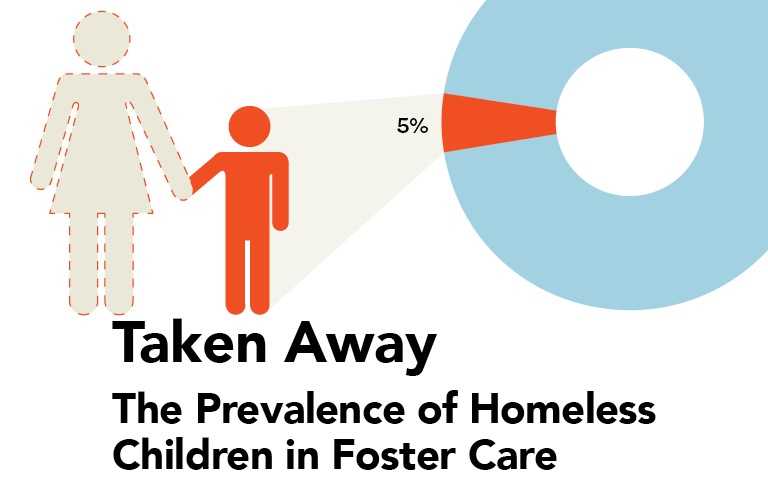
Taken Away: The Prevalence of Homeless Children in Foster Care

“When children are separated from their parents at an early age, they are at greater risk for mental health problems, developmental delays, and difficulty forming relationships later in life.”…

Read More

More Than a Place to Sleep: Understanding the Health and Well-Being of Homeless High School Students

In New York City, one out of every eight public school students has been homeless at some point in the past five years. One in four (26%) of these students is in high school. In this report, we begin to explore differences in risk behaviors and health outcomes between homeless high school students and their housed classmates. …

Read More
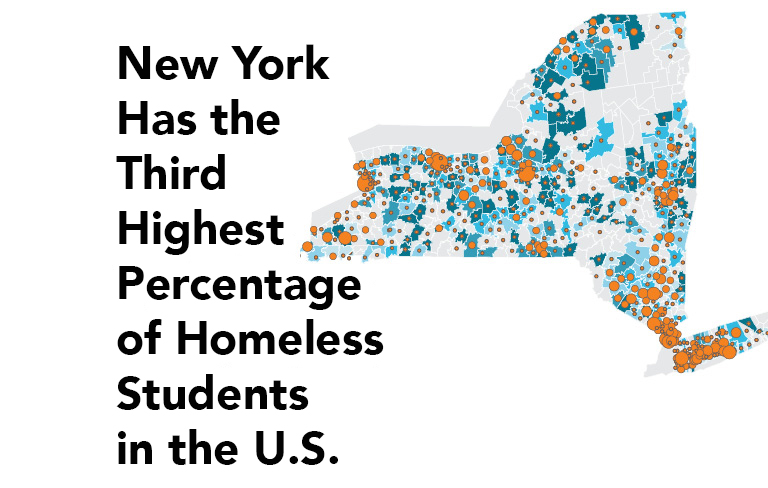
New York Has the 3rd Highest Percentage of Homeless Students in the U.S.

This snapshot is part of a series analyzing student homelessness in all 50 states and the District of Columbia. It analyzes how many homeless students are enrolled in public schools in New York, where in the state they reside, and how they perform in school compared to their peers.…

Read More
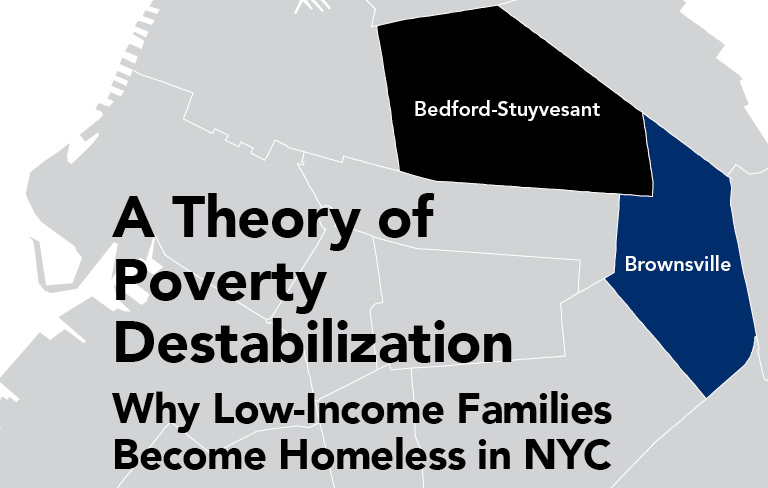
A Theory of Poverty Destabilization: Why Low-Income Families Become Homeless in New York City

Need for shelter in community districts in the South Bronx and central Brooklyn dominate the list of the highest-contributing areas, while comparatively few families in shelter come from Manhattan.…

Read More

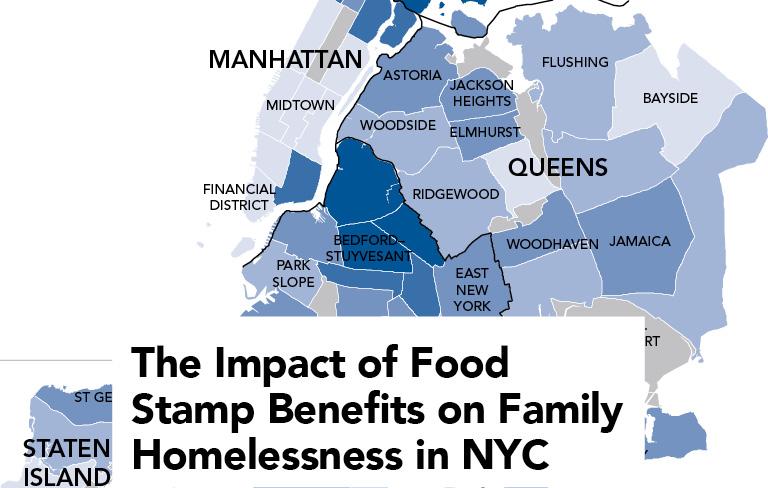
The Impact of Food Stamp Benefits on Family Homelessness in New York City

In 2011, over one-third (35%) of New York City residents had difficulty affording essential food. … Supplemental Nutrition Assistance Program (SNAP) benefit allowance does not take into account the higher cost of food in New York City compared to other urban areas.…

Read More

A New Path: An Immediate Plan to Reduce Family Homelessness

This special report proposes using the family shelter as a tool for parents with limited education and work experience, as well as for victims of domestic violence, and those with mental health and substance abuse issues, and a history in the child welfare system.…

Read More

Follow ICPH on Instagram

How family homelessness is covered can shape how the public understands the crisis.

Our report found that NYC news coverage often connected family homelessness to highly visible issues like shelter, safety, housing supply, and affordability. But other major drivers of homelessness—including domestic violence and overcrowding—received far less attention.

These gaps matter. A fuller understanding of family homelessness means recognizing not only where families go when they lose housing, but the circumstances that can lead them there and the supports that can help them regain stability.

#ICYMI check out Coverage of the Crisis: News Coverage of Family Homelessness in NYC to explore the findings and recommendations.

Read the report at the link in our bio.

2 0
Open post by icph_org with ID 18099067457624252
How family homelessness is covered can shape how the public understands the crisis.
 
Our report found that NYC news coverage often connected family homelessness to highly visible issues like shelter, safety, housing supply, and affordability. But other major drivers of homelessness—including domestic violence and overcrowding—received far less attention.
 
These gaps matter. A fuller understanding of family homelessness means recognizing not only where families go when they lose housing, but the circumstances that can lead them there and the supports that can help them regain stability.
 
#ICYMI check out Coverage of the Crisis: News Coverage of Family Homelessness in NYC to explore the findings and recommendations.
 
Read the report at the link in our bio.
Follow on Instagram

DHS Census Daily Report

DHS Census Daily Report 08/15/26

August 18, 2026
Tweets by ICPH_homeless

Latest Publications

Pages
August 15, 2026

Number of Families with Children in NYC DHS Shelter Comparison

Blog
June 8, 2026

Reading Between the Numbers: Limits of the 2025 PIT for Families Experiencing Homelessness

General
June 3, 2026

Coverage of the Crisis: News Coverage of Family Homelessness in NYC

Get ICPH News 
ICPH
36 Cooper Square  |  New York, NY 10003  |  (212) 358-8086  |  info@ICPH.org
© 2026 ICPH

You’re subscribed.

Now you’ll receive updates on ICPH publications, research and news each month. For content tailored to your interests and area, please share more information below.

Thank You.

Now you’ll receive updates on ICPH publications, research and news each month as well as content tailored to your interests and area.